1
When is a veterinary case
a true emergency?
Immediate care is required for difficulty breathing, loss of consciousness, severe bleeding that won't stop, abdominal bloating without the urge to vomit (in dogs this may indicate bloat/gastric torsion), seizures, or any suspicion of poisoning — in these cases, every minute counts.
2
What should we do if our pet
has swallowed a foreign object?
Do not try to induce vomiting or pull out the object at home, as this can cause more serious injury — seek emergency care immediately, where we can determine the exact need for intervention using X-ray or ultrasound.
3
How can we recognize the signs
of bloat (gastric torsion)
in large dogs?
Sudden abdominal bloating, restlessness, unproductive retching, and rapid breathing may indicate a life-threatening condition that can require surgery within minutes — in such cases, do NOT wait until morning; seek emergency care immediately.
4
When is overnight
hospitalization needed?
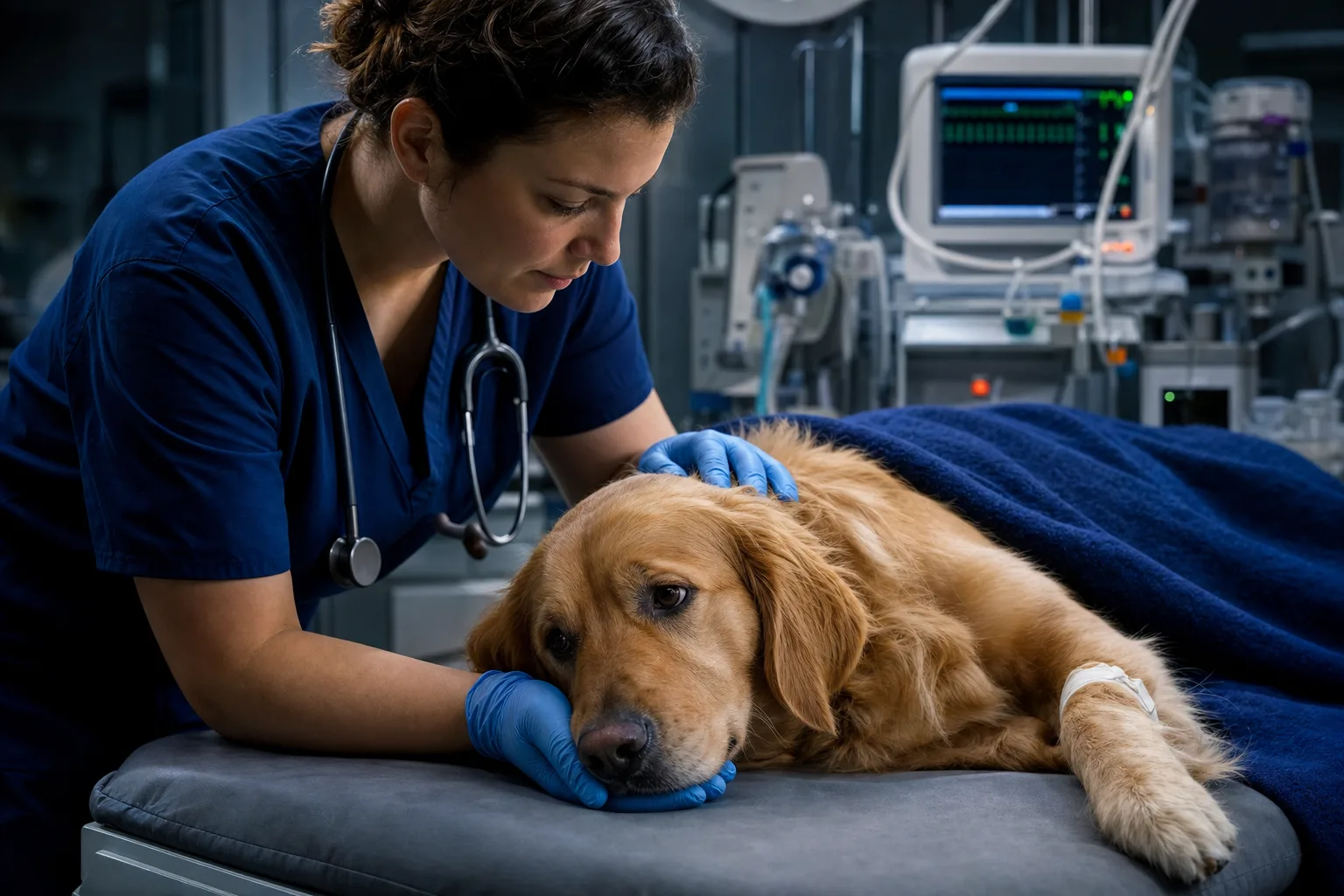
After more serious surgical procedures, during continuous IV therapy, or for patients in unstable condition requiring monitoring, overnight observation significantly increases the chances of a safe recovery.
5
How should we prepare for a
scheduled surgery?
An 8-12 hour fasting period is typically required before anesthesia (this does not necessarily apply to water, which we will always discuss with you), and it's advisable to assess anesthesia safety with a preliminary blood test, especially for older animals.